
Guide
How to brush a doodle coat so it actually works
Line brushing, the comb test and why a quick once-over with a slicker does not count as brushing.
A doodle coat, and most curly or wavy single coats, do not shed the way a labrador's does. The dead hair stays in the coat instead of falling out, and if it is not brushed all the way to the skin, it felts. This is the single biggest reason a coat that looked fine a fortnight ago turns up matted at a full boutique groom: the brushing was real, it just was not reaching the skin.
Line brushing, not a once-over
Hold a small section of coat flat between two fingers, close to the skin, and brush through that section only, from root to tip. Let it go, take the next section, and work your way across the dog in rows, the way you would section hair for a blow-dry. A quick pass over the whole dog with a slicker brush looks like brushing and does almost none of the work: it moves the top layer of coat around and leaves the undercoat against the skin completely untouched, which is exactly where felting starts.
The comb test
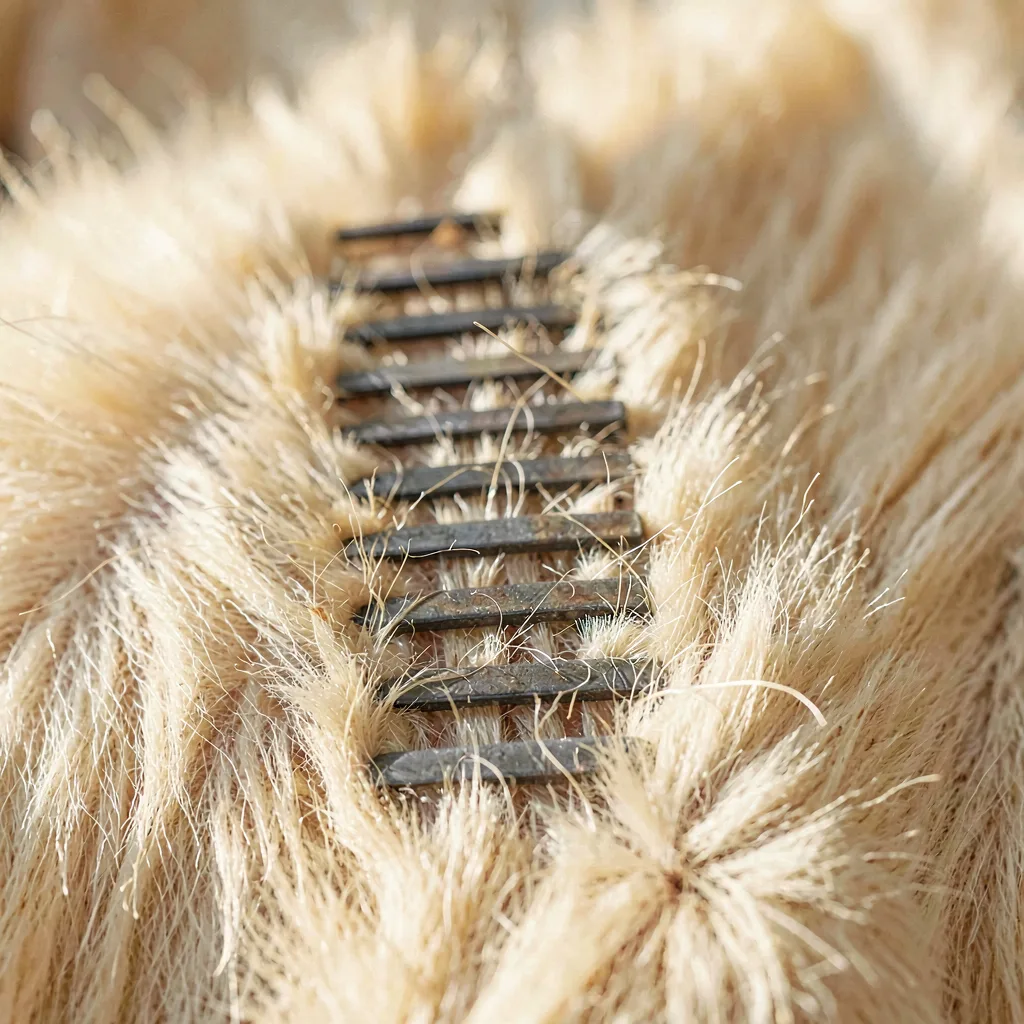
A slicker brush can lie to you. It glides through a mat sitting just under the surface without ever catching on it, so the coat looks brushed while the skin underneath is matted. A steel comb does not lie: if it runs from skin to tip in a section without catching, that section is genuinely brushed. If it snags, go back to the slicker on that spot and try again before moving on. Comb test every section you brush, not just the ones that look suspect. The spots that felt first, behind the ears, in the armpits, and where a harness sits, are rarely the spots that look bad from a distance.
How often, and for how long
Three times a week for most doodle coats, ten to fifteen minutes each time, is more useful than one long session on the weekend. A coat that is brushed little and often never has the chance to felt in the first place, while a coat left for a week between brushes has usually started matting somewhere by the time you get to it, even if it still looks fine on top. If your dog has just had a full boutique groom, start the routine again about three weeks out, once the coat has enough length to actually catch on a comb.
What good line brushing feels like
Slow. If you are moving quickly across the dog, you are on the top layer only. Work in small sections, use your free hand to hold the coat flat and find the skin, and expect the whole dog to take longer than you think it should. A properly brushed doodle, comb tested section by section, usually takes twenty to thirty minutes. That sounds like a lot until you compare it with the ninety extra minutes a matted coat recovery adds to a groom, and the shorter cut that comes with it.
When brushing is not enough
If the comb stops well short of the skin anywhere, or the coat feels solid rather than springy when you squeeze it, that section has already felted and brushing it out will hurt the dog. That is a job for a groomer with the right tools and the patience to work under matting safely, not a home fix. Bring it in rather than pulling at it, and we will show you exactly where it has gone and what we would do about it before we touch a clipper.
If you would rather have someone show you the technique on your own dog than read about it, a free style consult includes ten minutes of hands-on brushing advice for the coat in front of us, no groom booking required.